 The Importance of Indoor Security
Intelligent buildings need more than video surveillance to keep people and data safe in today’s landscape. The concerns buildings face have changed drastically in recent years and so to have the tools that protect them. From physical intrusion and property theft to data exfiltration and eavesdropping, it’s never been more important to bridge the gap between physical and digital security to keep buildings, and everything within them, safe.
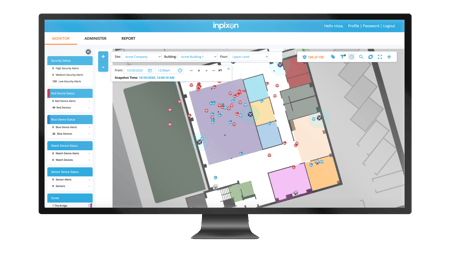
Secure any site with precise indoor positioning and wide spectrum RF detection. Leverage Inpixon to cultivate situational awareness within your buildings by detecting wireless devices and their movements. Our indoor security solution, Inpixon Aware®*, gives you both visibility into your facilities and a robust wireless intrusion detection solution in a single, live security dashboard, so you can make key decisions around security, risk mitigation and public safety, at scale.
AWARD WINNER
2022 Cyber Security Global Excellence Gold Award

The Globee Awards for Cyber Security Excellence honors industry leaders in security and information technology. Inpixon Aware was recognized as a Gold Winner for Security Product and Service for Government.
Learn MoreAWARD WINNER
Security Excellence - IoT Evolution

"Security is clearly the greatest concern for companies deploying IoT solutions. These winners commitment to securing devices and networks sets them apart. We are certain these innovators will continue to lead the market into the next decade and beyond."
Rich Tehrani, CEO | TCM